





European Architectural Studio Increases Website Conversions with Agentic AI
A leading European architectural studio with over 30 years of experience deployed an AI agent powered by Amazon Bedrock to help customers find house plans through natural language queries. The solution increased conversion rates by 20% and increased average visitor engagement time by 50%.
European University Cuts AI Research Costs with Cloud ML Platform
Using Amazon SageMaker, a European agricultural university cut GenAI/LLM dev costs by 50% and accelerated model training by 80%.
National Insurance Bureau Employs Agentic AI to Deliver Round-the-Clock Customer Support

A national insurance coordination organization deployed an AI agent using Amazon Bedrock and Amazon Lex to modernize customer service operations. The solution provides 24/7 customer support while reducing routine inquiry handling costs by 40%.
Film School Cuts Analysis Time with Agentic AI & Serverless

A leading European film education institution deployed a fully serverless AWS solution to automate the extraction of film credits from video files. The solution reduced processing time from 30 minutes to 1 minute per film.
Relivent e-commerce platform: How AWS helps manage events more efficiently

Relivent is an e-commerce platform that enables the purchase of tickets for cultural and entertainment events. Users can quickly and conveniently book tickets for concerts, theatrical performances, sporting events and other events in their area. The company focuses on transaction security and ticket authenticity, so customers can be sure of the quality of their purchases. By cooperating with organizers of various events, Relivent provides access to a wide range of events.
DevOps Transformation with GitHub and Azure for Vaiot
Vaiot is a company that creates solutions in the area of cryptocurrencies, AI, and civil law contracts. In 2024, before the launch of the new LegalTorch application, it faced serious technological challenges. The main problem was the manually created cloud infrastructure in Azure, the lack of CI/CD processes, application integration problems, and the need to meet stringent MiCA regulations. The aim of the project was to prepare the application for seamless operation and create a foundation for future development.
How did Qubtrix automate customer service with an AI-powered chatbot and AWS?
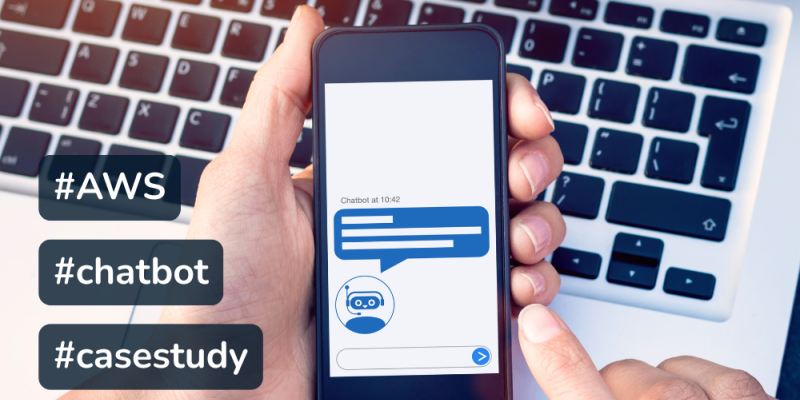
The QUBTRIX team was looking for a way to automate answers to frequently asked customer questions without involving the support department. The challenge was to create an effective system that would answer questions based on existing documentation and company data. It was crucial to verify the effectiveness of the Retrieval-Augmented Generation (RAG) approach and to use the AWS infrastructure in a way that allows for quick implementation, low maintenance costs, and the possibility of further development of the solution.
Education in the cloud: How PWSFTviT provided students with remote access to advanced tools thanks to AWS and GPU

See how PWSFTviT used the AWS cloud and GPUs to enable students to access advanced tools without expensive equipment.
DevOps Transformation with GitHub and Azure for Vaiot
Vaiot is a company specializing in solutions within the fields of cryptocurrencies, AI, and civil law contracts. In 2024, prior to the launch of their new application, LegalTorch, the company faced significant technological challenges. The primary issues included manually created cloud infrastructure in Azure, a lack of CI/CD processes, application integration problems, and the need to comply with strict MiCA regulations. The project’s objective was to prepare the application for seamless operation and establish a foundation for future development.
Using AWS services for secure data storage and enhanced security

Our client is a service sector company specializing in delivering top-quality medical imaging and radiotherapy devices. The devices are tailored to individual user needs and ensure efficient service both during and after the warranty period.